Lost in the Wild Beauty of Buenos Aires You’d Never Expect
Ever thought of Buenos Aires as just tango and city streets? Think again. Beyond the urban buzz lies a wild, untamed side most travelers miss — marshlands teeming with life, rivers whispering through silence, and sunsets that paint the sky like fire. I ventured deep into Argentina’s capital not for cafes, but for nature’s raw embrace. What I found wasn’t just greenery — it was a revelation. This is the Buenos Aires few talk about, but everyone should experience.
The Urban Jungle Meets Real Wilderness
Buenos Aires is often celebrated for its European flair, rich culture, and vibrant nightlife. Yet beneath the polished surface of its grand avenues and historic plazas lies a quieter, wilder truth — this metropolis is also home to thriving natural ecosystems that coexist with urban life in surprising harmony. Unlike most global capitals, where nature is often pushed to the margins, Buenos Aires has preserved and even unintentionally nurtured wild spaces within its boundaries. The city’s location along the Río de la Plata, one of the widest rivers in the world, creates a unique environmental corridor that supports wetlands, bird sanctuaries, and riparian forests just minutes from downtown.
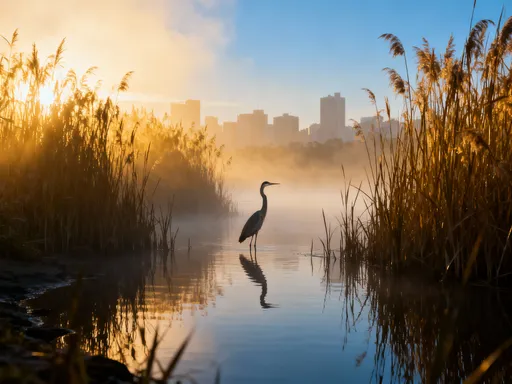
The juxtaposition of urban development and untouched nature is most evident in areas like the Costanera Sur Ecological Reserve, a sprawling green sanctuary that lines the southern edge of the city. What makes this duality remarkable is not just its existence, but how it came to be — not through deliberate conservation at first, but through urban planning that, in failing, allowed nature to take root. Where once there were plans for luxury high-rises and marinas, native grasses now sway in the wind, and herons stalk quietly through reeds. This accidental preservation has become a model of how cities can evolve alongside nature, rather than in opposition to it.
For travelers, this means an extraordinary opportunity: to experience true wilderness without leaving the city limits. The presence of such ecosystems within a major capital challenges the assumption that urban and natural environments are mutually exclusive. It invites a rethinking of what city travel can be — not just museums and markets, but also birdwatching, kayaking, and quiet reflection amid reeds and riverbanks. As more people seek meaningful, restorative travel experiences, Buenos Aires offers a rare fusion of cosmopolitan life and wild serenity.
Costanera Sur: Where Nature Reclaimed the City
The Costanera Sur Ecological Reserve stands as one of the most remarkable examples of urban rewilding in the world. Spanning over 350 hectares, this protected area was never intended to become a nature sanctuary. In the 1970s, the land was slated for a large-scale real estate and port development project that ultimately failed due to economic and political instability. Left untouched for decades, the abandoned site was gradually colonized by native vegetation and wildlife. By the 1980s, it had transformed into a thriving wetland ecosystem, prompting environmentalists to advocate for its permanent protection. In 1989, the Argentine government officially designated it a nature reserve, safeguarding it from future development.
Today, walking through Costanera Sur feels like stepping into another world. Boardwalks wind through tall stands of reeds and willow trees, while the air hums with the calls of birds and insects. The reserve is home to more than 370 recorded species of birds, making it one of the most important urban birdwatching sites in South America. Visitors might spot the striking black-crowned night heron, the agile vermilion flycatcher, or the majestic osprey diving for fish. Mammals such as the small gray fox and the elusive long-tailed weasel also roam the underbrush, while caimans — small crocodilian relatives — can occasionally be seen basking along the water’s edge.
For those planning a visit, access is straightforward and welcoming. The main entrance is located near the Avenida Hernandarias underpass, with clear signage and information boards. Guided tours are available on weekends and can greatly enhance the experience, especially for first-time visitors unfamiliar with local species. Early morning and late afternoon are ideal times to visit, when wildlife is most active and the light casts a golden glow across the marshes. Bicycles are permitted on designated paths, offering a peaceful way to cover more ground. There are no cafes or shops inside the reserve, reinforcing its commitment to minimal human impact.
What makes Costanera Sur truly exceptional is not just its biodiversity, but its symbolic value. It demonstrates how nature, when given even a small chance, can reclaim space and flourish. In an era of rapid urbanization, this reserve serves as a powerful reminder that cities do not have to be concrete deserts. With thoughtful planning and protection, they can become refuges for both people and wildlife.
The Magic of the Paraná Delta: A Labyrinth of Life
A short journey north of Buenos Aires unlocks one of South America’s most enchanting natural landscapes — the Paraná Delta. This vast network of islands, waterways, and forested wetlands stretches over 1,500 square kilometers, forming a lush, ever-shifting maze where land and water blend seamlessly. The delta begins near the town of Tigre, a charming riverside community accessible by train or ferry from the city center. From there, the landscape transforms dramatically: cobblestone streets give way to wooden docks, and the hum of traffic fades into the gentle lapping of waves against boat hulls.
Exploring the delta is best done by boat, whether on a scheduled eco-tour or a private excursion. Kayaking offers an especially intimate experience, allowing travelers to glide silently through narrow channels lined with willows, ferns, and water lilies. Sunlight filters through the canopy above, casting dappled patterns on the water, while kingfishers dart between branches and turtles sun themselves on half-submerged logs. Some islands are privately owned, dotted with stilt houses connected by floating walkways; others remain wild, accessible only to those willing to navigate the shifting currents.
Tigre serves as the primary gateway to the delta, offering a range of visitor services while maintaining a relaxed, small-town atmosphere. The town’s nautical museum, fruit markets, and craft fairs provide cultural context, but the real attraction lies beyond the docks. Regular ferry services run to islands like Islas del Delta and Barrio Las Palmas, where visitors can walk forested trails, enjoy riverside picnics, or simply sit in quiet contemplation. Local operators offer eco-friendly boat tours led by experienced guides who share insights about the delta’s ecology, history, and conservation challenges.
Safety and accessibility are well managed. Most tour operators adhere to strict environmental guidelines, ensuring minimal disturbance to wildlife. Life jackets are provided, and routes are designed to accommodate travelers of varying experience levels. While the delta is generally safe, it’s advisable to travel with a guide, especially for those unfamiliar with river navigation. The best time to visit is during the spring and fall months, when temperatures are mild and migratory birds add to the region’s biodiversity. Summer brings lush greenery but also higher humidity and mosquitoes, so lightweight, breathable clothing and insect repellent are recommended.
Flora and Fauna That Define the Region
The natural areas surrounding Buenos Aires support a rich tapestry of plant and animal life, much of which is uniquely adapted to the region’s mix of wetlands, grasslands, and riparian forests. Among the most iconic species is the marsh deer, Argentina’s largest native deer, distinguished by its long legs and soft, silken coat. Though rare and elusive, sightings have been reported in protected wetlands like the Paraná Delta and Costanera Sur, particularly during early morning hours. Another notable resident is the southern lapwing, a boldly patterned bird with a loud, piercing call that serves as a natural alarm system across open fields.
Birdlife dominates the region’s biodiversity, with over 400 species recorded in and around the capital. The roseate spoonbill, with its pink plumage and distinctive curved bill, wades through shallow waters in search of small fish and crustaceans. The black-crowned night heron stalks prey under the cover of dusk, while the roadside hawk circles overhead, scanning for movement. Seasonal patterns play a crucial role: during the austral summer, migratory birds from the northern hemisphere arrive, enriching the local ecosystem. In winter, resident species become more visible as foliage thins.
Equally important is the region’s native vegetation. The palo borracho, or “drunken stick” tree, stands out with its spiky trunk and bursts of pink or white flowers that bloom in late summer. Its name comes from the way its branches appear randomly arranged, as if the tree had been “drinking.” Another emblematic species is the ceibo, Argentina’s national flower, which erupts in vivid red blossoms during the spring. Its striking appearance has inspired myths and poetry, and it often grows along riverbanks, stabilizing soil and providing shade.
These plants and animals have adapted remarkably to living near urban areas. Some birds, like the shiny cowbird, have learned to follow human activity for food scraps, while others, such as the monk parakeet, build large communal nests on utility poles. However, this proximity also brings challenges — habitat fragmentation, pollution, and invasive species threaten the delicate balance. Conservation efforts focus on monitoring populations, restoring native vegetation, and educating the public about coexistence. For visitors, observing these species in their natural habitats offers not just beauty, but a deeper understanding of resilience and adaptation.
Sustainable Ways to Explore the Wild Side
As interest in eco-tourism grows, so does the responsibility to protect the very environments that attract visitors. The wild spaces around Buenos Aires are fragile, and unchecked tourism can lead to erosion, pollution, and disturbance to wildlife. Fortunately, there are meaningful ways to explore these areas while minimizing impact. Choosing eco-certified boat tours is one of the most effective steps travelers can take. These operators follow strict guidelines — maintaining safe distances from animals, limiting group sizes, and using low-emission engines — ensuring that excursions remain respectful of the ecosystem.
Another essential practice is adhering to the principle of “leave no trace.” This means carrying out all trash, avoiding single-use plastics, and refraining from feeding or approaching wildlife. Even seemingly harmless actions, like tossing bread to ducks, can disrupt natural feeding behaviors and introduce harmful substances into the food chain. Instead, visitors are encouraged to observe quietly, using binoculars or zoom lenses to get a closer look without intrusion.
Supporting local conservation initiatives also makes a tangible difference. Organizations like Fundación Acuática and Aves Argentinas work to protect wetlands, monitor bird populations, and promote environmental education. Travelers can contribute by donating, volunteering, or participating in citizen science programs such as bird counts. Some eco-tours partner directly with these groups, with a portion of proceeds going toward preservation efforts.
Community-based tourism is another growing trend in the Tigre region, where local families open their homes or lead guided walks through private islands. These experiences offer authentic insights into delta life while providing economic benefits to residents committed to sustainable practices. By choosing such options, travelers help ensure that tourism supports, rather than exploits, the environment and its people.
Hidden Access Points Most Tourists Miss
While Costanera Sur and Tigre draw well-deserved attention, there are quieter, lesser-known spots where nature reveals itself in more intimate ways. One such place is a secluded inlet near San Fernando, accessible via a small public dock off Ruta 202. Here, the water is calm, and the surrounding reeds provide cover for nesting birds. Early risers may witness the sunrise reflecting off the river, undisturbed by crowds. Another hidden gem is the community-run lookout in Barrancas de Belgrano, a modest elevated platform built by local volunteers. Though small, it offers panoramic views of the Río de la Plata and frequent sightings of egrets and cormorants.
In Puerto Madero, a modern district known for its skyscrapers and upscale restaurants, a riverside walking path traces the old docks, now transformed into a green corridor. At dusk, this path becomes a peaceful retreat, where the city’s lights shimmer on the water and the breeze carries the scent of wild mint growing along the banks. It’s a reminder that even in the most developed areas, nature finds a way to persist.
For those willing to explore further, the northern stretch of the Costanera Norte offers quiet trails through native grasslands, rarely visited by tourists. Accessible from the Belgrano neighborhood, this area provides excellent opportunities for jogging, cycling, or simply sitting on a bench with a book, surrounded by birdsong. Each of these spots requires no special permits, but visitors should respect posted signs, stay on designated paths, and avoid disturbing plants or animals.
Discovering these hidden access points adds depth to the travel experience, offering moments of solitude and connection that larger, more commercialized sites often lack. They reflect a growing awareness among locals and visitors alike that nature is not something to be conquered or consumed, but cherished and protected.
Why This Side of Buenos Aires Changes How You See Cities
Experiencing the wild side of Buenos Aires does more than offer scenic escapes — it shifts perspective. In a world where cities are often seen as places of noise, haste, and artificiality, finding tranquility within one challenges assumptions about urban life. To walk through a marsh where herons stand motionless in the mist, or to paddle through a delta where trees grow from water, is to remember that nature is not separate from human existence, but intertwined with it. These spaces serve as green lungs, filtering air, regulating temperature, and providing mental respite in an increasingly fast-paced world.
Buenos Aires demonstrates that cities can be more than concrete and steel — they can be ecosystems in their own right. The accidental creation of Costanera Sur, the preserved beauty of the Paraná Delta, and the quiet resilience of hidden green corridors all point to a different model of urban living, one where development does not mean destruction. Other cities can learn from this example, recognizing that protecting natural spaces within metropolitan areas is not a luxury, but a necessity for long-term sustainability.
For travelers, especially women between 30 and 55 who often seek meaningful, rejuvenating experiences, this side of Buenos Aires offers something profound: a chance to reconnect — with nature, with oneself, and with the idea that beauty and peace are not reserved for remote wilderness, but can flourish even in the heart of a bustling capital. It invites a slower, more mindful way of traveling, where the goal is not to check off landmarks, but to absorb moments of stillness and wonder.
As the sun sets over the Río de la Plata, painting the sky in hues of amber and rose, it’s easy to feel a sense of gratitude. Buenos Aires, in all its complexity, reminds us that wildness is not lost — it is waiting, just beyond the pavement, ready to be discovered by those who look closely enough. This is not just a city with nature on its edges. It is a city where nature lives, breathes, and thrives — a quiet revolution, one reed, one bird, one sunrise at a time.